
Real clinical audio is messy
Multiple speakers, interruptions, accents, medical vocabulary and background noise break generic transcription. Engine choice and diarization have to be tested on your encounters, not on clean samples.
AI Medical Scribe Development Company
We build ambient AI scribes and clinical documentation software that turn patient encounters into structured, clinician-approved notes and write them back to the EHR. Our SureScribe build cut documentation from more than an hour to about 20 minutes per patient.
What Is This Service?
An AI medical scribe listens to a clinical encounter, transcribes it, and turns the conversation into the structured documentation a clinician would otherwise type: intake summaries, history of present illness, orders, medications, labs, procedures and follow-up. The hard part is not the demo. It is doing this reliably with overlapping speakers, medical terminology, noisy rooms and specialty-specific note formats, and then getting approved data into the EHR without creating new risk.
Torch Solutions has built this end to end. For SureScribe we combined clinical speech recognition with multi-stage LLM pipelines, a side-by-side raw-versus-refined review screen, voice corrections, patient-record RAG and EHR write-back to Athenahealth and CharmHealth. Clinicians stay in control: nothing reaches the official record until they approve it.
We work with health-tech founders building a scribe product, digital-health platforms adding ambient documentation to an existing app, and provider groups that need specialty templates or EHR depth that off-the-shelf scribes do not offer.
Business Challenges
Multiple speakers, interruptions, accents, medical vocabulary and background noise break generic transcription. Engine choice and diarization have to be tested on your encounters, not on clean samples.
A good note needs the right sections in the right order for each specialty and role. One large prompt rarely holds up; tab-specific, multi-stage pipelines with validation do.
If reviewing AI output takes as long as writing the note, adoption fails. The review experience, corrections and approval checkpoints decide whether time is actually saved.
Audio and notes are protected health information. Encryption, access control, vendor agreements, data deletion and safe EHR write-back must be designed in from the start.
Features & Capabilities
Encounter recording on web or mobile, speaker separation and medical-vocabulary transcription using the engine that performs best on your audio (for example AssemblyAI, AWS Transcribe or Whisper).
LLM pipelines that convert conversation into structured, editable sections such as intake summary, HPI, orders, medications, labs and procedures, with specialty and role-specific templates.
Side-by-side raw and refined views, inline and voice-driven edits, and explicit approval before anything is synchronized, so the clinician remains accountable for the record.
Patient registration, reports, lab results and approved notes moving through EHR APIs. We have shipped Athenahealth and CharmHealth integrations and assess other EHRs during discovery.
Natural-language questions over selected reports and history with grounded, token-efficient retrieval that limits how much PHI is sent to the model.
Separate nurse and physician experiences for intake, encounter recording, review, approval and sync, with audit history for every change.
Business Benefits
Documentation that took more than an hour per patient in SureScribe's workflow was reduced to about 20 minutes, with clinicians reviewing rather than typing.
Specialty templates and section-level prompts produce documentation that matches how your clinicians and your EHR expect notes to look.
You choose the transcription and model providers, where audio is stored and when it is deleted, instead of inheriting a third-party scribe's policies.
For health-tech companies, the scribe becomes your own product: white-label workflows, multi-tenant administration and integrations your customers ask for.
How We Build AI Scribes
We map who records, who reviews, which note sections matter for each specialty, which EHR you use and what 'good documentation' means for your clinicians.
With appropriate safeguards, we test candidate speech engines on representative encounters and compare accuracy, diarization, latency and cost before committing.
We design the multi-stage prompts, structured outputs and validation, and build an evaluation set so note quality is measured, not judged by a few examples.
We prototype and test the clinician review screen, corrections and approvals with real users, because this is where time is saved or lost.
We connect registration, reports, labs and note write-back, and implement encryption, access control, vendor agreements, audit logging and PHI deletion rules.
We launch with a pilot group, track documentation time, edit rates and failures, and improve prompts, templates and workflow from real usage.
Technologies We Use
We choose engines and models by measured performance on your encounters and by your compliance requirements, not by vendor preference.
Who It's For
Founders building an ambient scribe or documentation product who need an experienced team for the speech, LLM, review and EHR layers.
Organizations whose specialty templates, workflows or EHR integration needs are not met by generic scribe subscriptions.
Telehealth, care-management and patient-engagement products adding AI documentation to an existing application.
Visit documentation, care notes and handoffs for teams working outside the clinic, informed by our HomeTeams caregiving work.
Why Torch Solutions
SureScribe covers the full path: recording, transcription, multi-stage notes, review, RAG and EHR synchronization, with measured time savings.
We build the web and mobile apps, APIs, cloud infrastructure and integrations around the AI, so the scribe works inside real clinical workflows.
Review, correction and approval are first-class features, which is what makes clinicians trust and adopt the tool.
We benchmark speech and language models for your use case and keep clean boundaries so providers can be switched as the market changes.
Related Case Studies
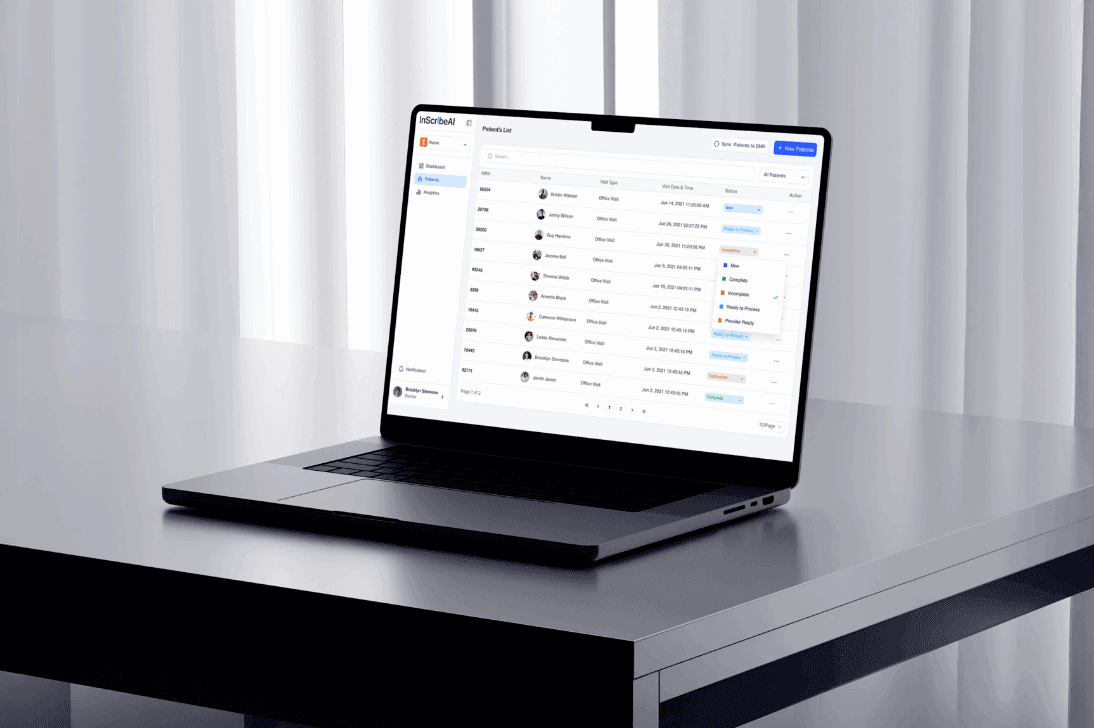
HIPAA-aware AI scribe: clinical speech recognition, multi-stage LLM notes, clinician approval and Athenahealth / CharmHealth integration. Documentation cut from 60+ to about 20 minutes per patient.
Read Case Study →
Caregiving app with voice-based conversational AI, care plans, task coordination, secure team chat and accessible design for older users.
Read Case Study →Engagement & Timelines
Most teams start with a short discovery and benchmark, then build an MVP for a pilot group before a phased production rollout.
About 1–2 weeks
Confirm workflows, note formats, EHR access and the best transcription and model setup.
Typically 4–8 weeks
A working scribe for a pilot group with recording, note generation and clinician review.
Phased over several months
EHR write-back, more specialties and roles, monitoring and scale.
We offer fixed-scope delivery for well-defined phases or time-and-materials for evolving products. A budget range is shared after the scoping call, once audio, specialties and EHR requirements are known.
Combine this capability with the application, cloud, data, integration, and product engineering required to operate it reliably.
Frequently Asked Questions
Buy an off-the-shelf scribe (for example Abridge, Suki or Nuance DAX Copilot) if its note formats, EHR support and data policies fit your clinicians. Build when you are creating a scribe product, need specialty templates or workflows those tools do not support, need deeper EHR integration, or need control over where audio and PHI are processed.
Accuracy depends on audio quality, speakers, specialty vocabulary, the transcription engine and the note pipeline. That is why we benchmark engines on your encounters and build an evaluation set for note quality. Clinicians review and approve every AI-refined field before it reaches the EHR.
We have shipped integrations with Athenahealth and CharmHealth covering patient registration, reports, lab results and approved notes. For other EHRs we assess the available APIs, FHIR endpoints and marketplace requirements during discovery.
We design for HIPAA from the start: encryption, role-based access, audit logging, business associate agreements with vendors that handle PHI, minimal data sent to models and defined deletion of audio and transcripts. Your compliance team owns the final determination for your organization.
Discovery and an engine benchmark take about one to two weeks. A pilot-ready MVP typically takes four to eight weeks. EHR write-back, additional specialties and production hardening are delivered in phases over several months.
The main drivers are the number of specialties and note templates, EHR integration depth, web versus mobile capture, compliance requirements and per-encounter speech and model costs. We share a budget range after the scoping call.
Notes are generated in structured sections from the transcript, validated, and shown side by side with the raw transcript so clinicians can check every field. Patient-record questions use retrieval over selected documents rather than the model's memory.
Planning an AI scribe or clinical documentation product? Contact Torch Solutions.
CustomSoftware DevelopmentCompany
Talk with an experienced software team about your goals, workflows, users, integrations, and technical risks before you commit to a roadmap, architecture, or development budget.