Group sessions
One recording, many patients. Notes have to capture the session and each participant's part in it without mixing one person's information into another's record.
AI for Addiction Treatment Centers
We add AI to the software your program already uses: scribes for individual and group sessions, intake and assessment documentation, and treatment plan drafts that a clinician reviews and approves. Built for residential, outpatient and substance use disorder (SUD) programs.
The Opportunity
Counselors and clinicians in addiction treatment spend a large part of every day documenting: intakes, biopsychosocial assessments, individual and group notes, treatment plans and reviews. Most AI documentation products for behavioral health come bundled with a full EHR, which means switching systems to get them.
Torch Solutions takes the other route. We add AI to the application, EHR and communication tools you already run, so your workflows, forms and reporting stay as they are. The AI listens, drafts and suggests; your clinicians review, edit and approve before anything is saved to the record.
This is the same engineering we shipped in SureScribe, an AI clinical documentation platform with clinician approval and EHR write-back that reduced documentation from more than an hour to about 20 minutes per patient. Behavioral health adds its own requirements, especially around SUD record confidentiality, and we design for those from the first conversation.
Business Challenges
One recording, many patients. Notes have to capture the session and each participant's part in it without mixing one person's information into another's record.
Intakes and assessments have many fields and take a long time to complete. Clinicians need help filling them in, not a tool that decides for them.
Substance use disorder treatment records are protected by 42 CFR Part 2 as well as HIPAA, with specific patient-consent requirements for disclosure.
Programs already depend on an EHR, custom forms and patient-communication tools. A new platform is rarely an option; integration is.
Features & Capabilities
Record or dictate a session and receive a structured draft note in your program's format for the clinician to review, edit and sign.
A session summary plus per-participant draft notes, with each note checked by the facilitator before it is filed to that patient's record.
AI listens to the interview, suggests values for assessment fields and shows the supporting transcript evidence, so clinicians confirm rather than type.
Draft problems, goals and interventions from assessment findings and progress notes. The clinician approves every plan before it is used.
We connect to your existing EHR or application through its APIs and keep tools such as Emitrr in your workflow. We assess each system's integration options during discovery.
Access controls, audit logs and data flows designed around HIPAA and 42 CFR Part 2 consent, including which vendors may receive which data.
Business Benefits
Drafts replace blank pages, so clinicians spend their time reviewing and correcting instead of typing.
Your EHR, forms, reports and patient-communication tools stay. AI is added where the work already happens.
Every note, field and plan is a draft until a licensed clinician approves it. The record remains theirs.
Note types, assessment forms and treatment plans follow your program's templates and payer requirements.
How We Work
We map your note types, assessments, group formats, current systems and consent process, and identify where AI saves the most time.
We define what is recorded, where it is processed and stored, who can see it, and how HIPAA and 42 CFR Part 2 consent apply, with your compliance lead.
A working prototype on one workflow, such as individual session notes, evaluated with your clinicians on representative sessions.
We add capture, review and approval to your existing app or EHR and write approved content back.
A small group of clinicians uses it in real sessions while we measure time saved, edit rates and issues.
We extend to more note types and teams, monitor quality and keep improving.
Technologies We Use
We select speech and language models by measured performance on your sessions and by your compliance requirements.
Who It's For
High documentation volume across intake, daily notes, groups and treatment plan reviews.
Individual and group sessions with recurring progress notes and plan updates.
Programs whose records fall under 42 CFR Part 2 and need consent-aware data handling.
EHR and practice-management companies adding AI documentation to their own product.
Why Torch Solutions
SureScribe covers recording, transcription, multi-stage notes, clinician review and EHR write-back, with measured time savings.
Our default is integration with your current software, not a new platform to migrate to.
Review, correction and approval are core features, not afterthoughts.
We tell you where AI should not make the call, and we confirm licensing before working with proprietary clinical criteria.
Related Case Studies
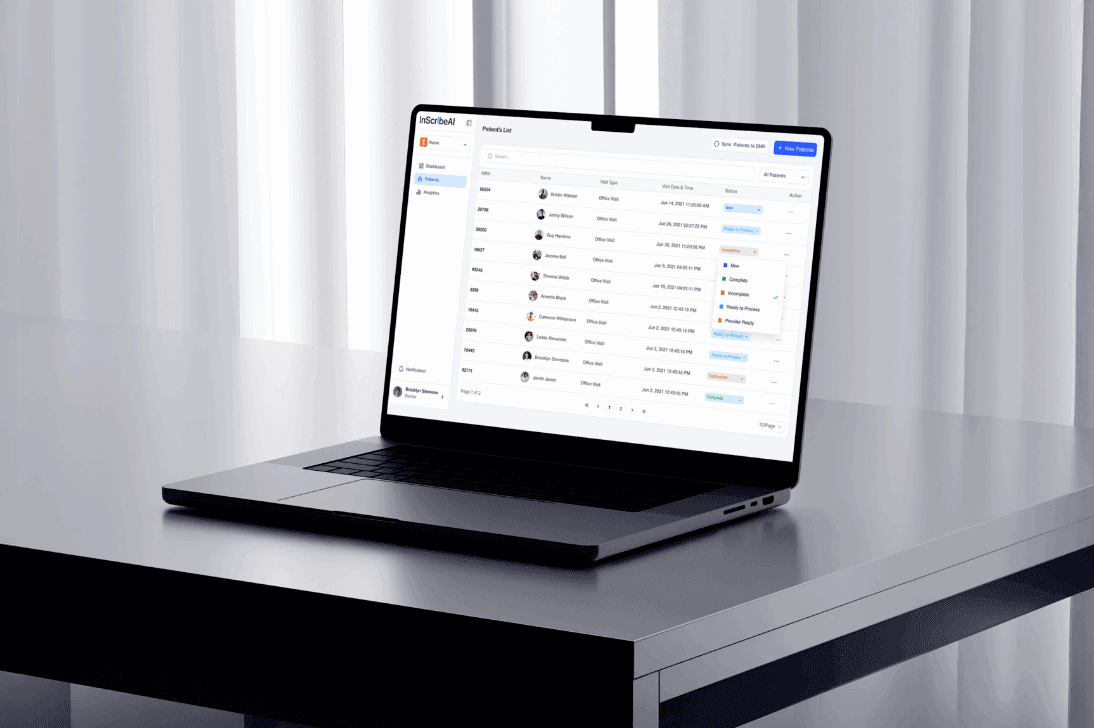
HIPAA-aware AI scribe: clinical speech recognition, multi-stage LLM notes, clinician approval and Athenahealth / CharmHealth integration. Documentation cut from 60+ to about 20 minutes per patient.
Read Case Study →Engagement & Timelines
Start small, prove it with your clinicians, then expand.
About 1–2 weeks
Workflows, systems, consent process and the best first use case.
About 4 weeks
One workflow working end to end, evaluated with your team.
Phased
Integration into your software, pilot group, then wider rollout.
This page is general information, not legal advice. Your compliance and legal teams make the final determination on HIPAA and 42 CFR Part 2.
Combine this capability with the application, cloud, data, integration, and product engineering required to operate it reliably.
Frequently Asked Questions
No. We add AI to your existing application or EHR through its APIs or interface, and keep your current forms, workflows and reporting. If a system has no usable integration option, we tell you during discovery and propose alternatives.
42 CFR Part 2 is the federal regulation that protects the confidentiality of substance use disorder treatment records and sets consent requirements for disclosing them. We design data flows, vendor choices, access controls and audit logs around your consent process, together with your compliance lead. This is general information, not legal advice.
Yes. The design produces a session summary and a separate draft note for each participant, and the facilitator reviews each note so that one patient's information is not filed in another's record.
No. AI can extract evidence from the conversation and suggest values for assessment fields, but a licensed clinician reviews, approves and makes the determination. We work with the criteria and assessment tools your program is licensed to use.
Our approach is to keep the tools you rely on in place. For each system, including Emitrr, we review the available APIs and integration options during discovery before committing to a design.
Discovery takes about one to two weeks and a proof of concept about four weeks. Integration and rollout are delivered in phases after that.
Running a treatment program and exploring AI documentation? Contact Torch Solutions.
CustomSoftware DevelopmentCompany
Talk with an experienced software team about your goals, workflows, users, integrations, and technical risks before you commit to a roadmap, architecture, or development budget.