
AI that decides instead of assists
Scores generated without clinician review are a clinical and liability risk.
AI Clinical Assessment Software Development
AI listens to the assessment interview, extracts the evidence and suggests a value for each field. A clinician reviews and approves every field, and scores are calculated only after that approval.
What Is This Service?
Structured clinical assessments take time because every field needs the clinician's attention: listening, recalling what was said, choosing a value and documenting why. AI can remove the typing and searching without taking over the judgment.
In the systems we build, the AI works from the recorded interview. For each assessment field it suggests a value and shows the exact transcript passages that support it. The clinician accepts, changes or rejects each suggestion. Only when the clinician has approved the fields does the software calculate any dimension or composite score, using the scoring rules of the assessment tool your organization is licensed to use.
The AI never issues a score or a level-of-care determination on its own. It prepares the evidence; the clinician decides.
Business Challenges
Scores generated without clinician review are a clinical and liability risk.
A suggested value is only useful if the clinician can see what in the conversation supports it.
Many assessment instruments and criteria are copyrighted or licensed, with rules about how software may use them.
Programs need to show who approved each value, when, and what the AI originally suggested.
Features & Capabilities
Finds the passages in the interview that relate to each assessment field and links them to it.
Proposes a value for each field as a draft, marked clearly as an AI suggestion.
Each field is accepted, edited or rejected by the clinician, with the evidence beside it.
Dimension and composite scores are calculated by deterministic rules from clinician-approved values, never from raw AI output.
Records the AI suggestion, the clinician's final value, who approved it and when.
Works inside your current assessment application and saves to your existing system.
Business Benefits
Clinicians confirm and correct instead of recalling and typing every field.
Each value is linked to what the patient actually said.
The same evidence standard is applied to every assessment, with the clinician's judgment on top.
A clear trail shows that a licensed clinician reviewed and approved every scored value.
How It Works
We identify the assessment instruments and criteria you use and confirm, with you, what your licenses permit before any design work.
The assessment conversation is captured and transcribed inside your existing application.
The AI links relevant passages to each field of your assessment form.
A draft value is proposed for each field, shown with its evidence.
The clinician reviews every field and approves, edits or rejects each suggestion.
Scores are computed from approved values using your tool's rules and saved with a full audit trail.
Technologies We Use
Language models handle evidence extraction and suggestions; scoring is deterministic code, so results are reproducible and testable.
Who It's For
Intake and placement assessments completed by counselors and clinicians.
Structured clinical interviews and periodic reassessments.
Recurring structured assessments completed in the field.
Vendors adding AI assistance to assessment modules in their software.
Why Torch Solutions
Suggest, review, approve, then score. The order is enforced in the software, not left to policy.
We do not embed proprietary criteria in AI. We work with your licensed tools and confirm licensing during discovery.
The capture, drafting and clinician-approval patterns come from our SureScribe build.
No new platform; the assistance appears inside the assessment your team already uses.
Related Case Studies
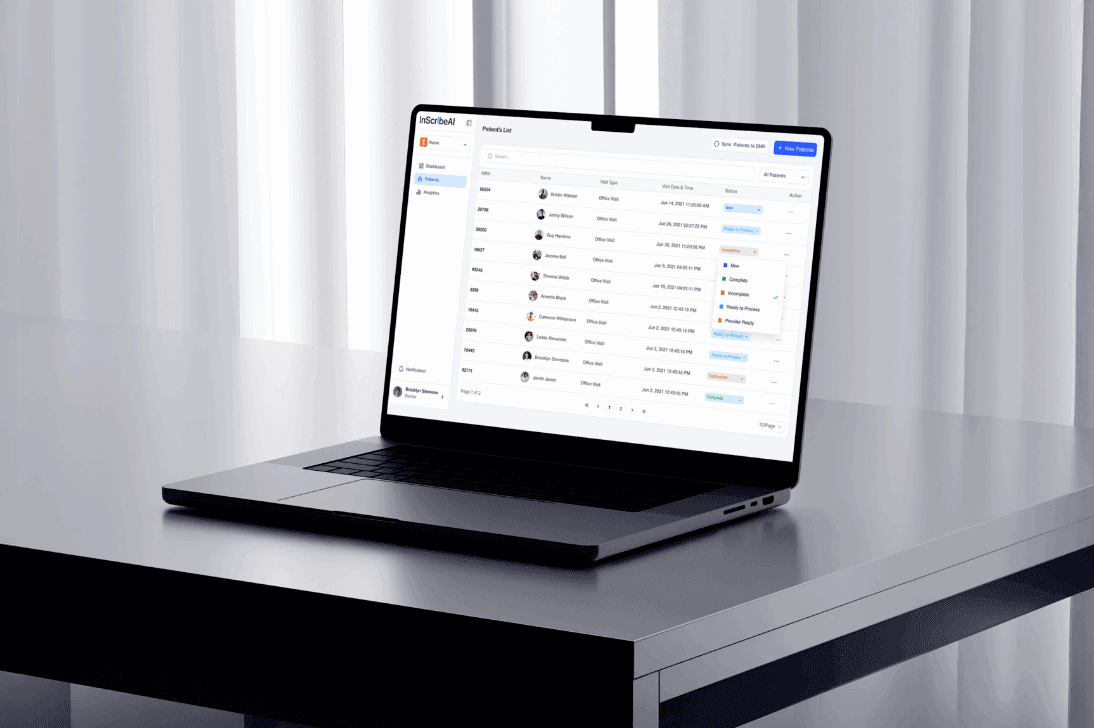
HIPAA-aware AI scribe: clinical speech recognition, multi-stage LLM notes, clinician approval and Athenahealth / CharmHealth integration. Documentation cut from 60+ to about 20 minutes per patient.
Read Case Study →Engagement & Timelines
Assessment projects begin with tools, licensing and one form.
About 1–2 weeks
Assessment tools, licensing, current application and review workflow.
About 4 weeks
One assessment form: evidence, suggestions and clinician approval.
Phased
Built into your application with scoring, audit trail and write-back.
We do not put the ASAM Criteria or other proprietary criteria into AI systems, and we do not automate level-of-care decisions. This page is general information, not legal or clinical advice.
Combine this capability with the application, cloud, data, integration, and product engineering required to operate it reliably.
Frequently Asked Questions
No. The AI suggests field values with supporting evidence. A licensed clinician reviews and approves each field, and scores are calculated only from approved values. The clinician makes the determination.
No. We do not put the ASAM Criteria or other proprietary criteria into AI systems or automate ASAM level-of-care decisions. We work with the criteria and assessment tools your organization is licensed to use, and we confirm licensing for any proprietary criteria during discovery.
Each suggested value appears next to the transcript passages that support it. The clinician can accept it, change it or reject it, and the system records the outcome.
By deterministic rules implemented in code from the scoring method of your licensed tool, applied only to clinician-approved values. The language model is not used to compute scores.
Yes. This is designed as an addition to an existing app, including older web applications, with results saved to your current system.
Yes. The system stores the AI suggestion, the clinician's final value, the approver and the time, so reviews and audits can see how each value was reached.
Want AI assistance in your assessments, with clinicians in control? Contact Torch Solutions.
CustomSoftware DevelopmentCompany
Talk with an experienced software team about your goals, workflows, users, integrations, and technical risks before you commit to a roadmap, architecture, or development budget.